Showing posts with label Copenhagen. Show all posts

Thursday, April 16, 2015

The Bike-sharing World - Third Week of April 2015

Europe:
Denmark:
                         Copenhagen:
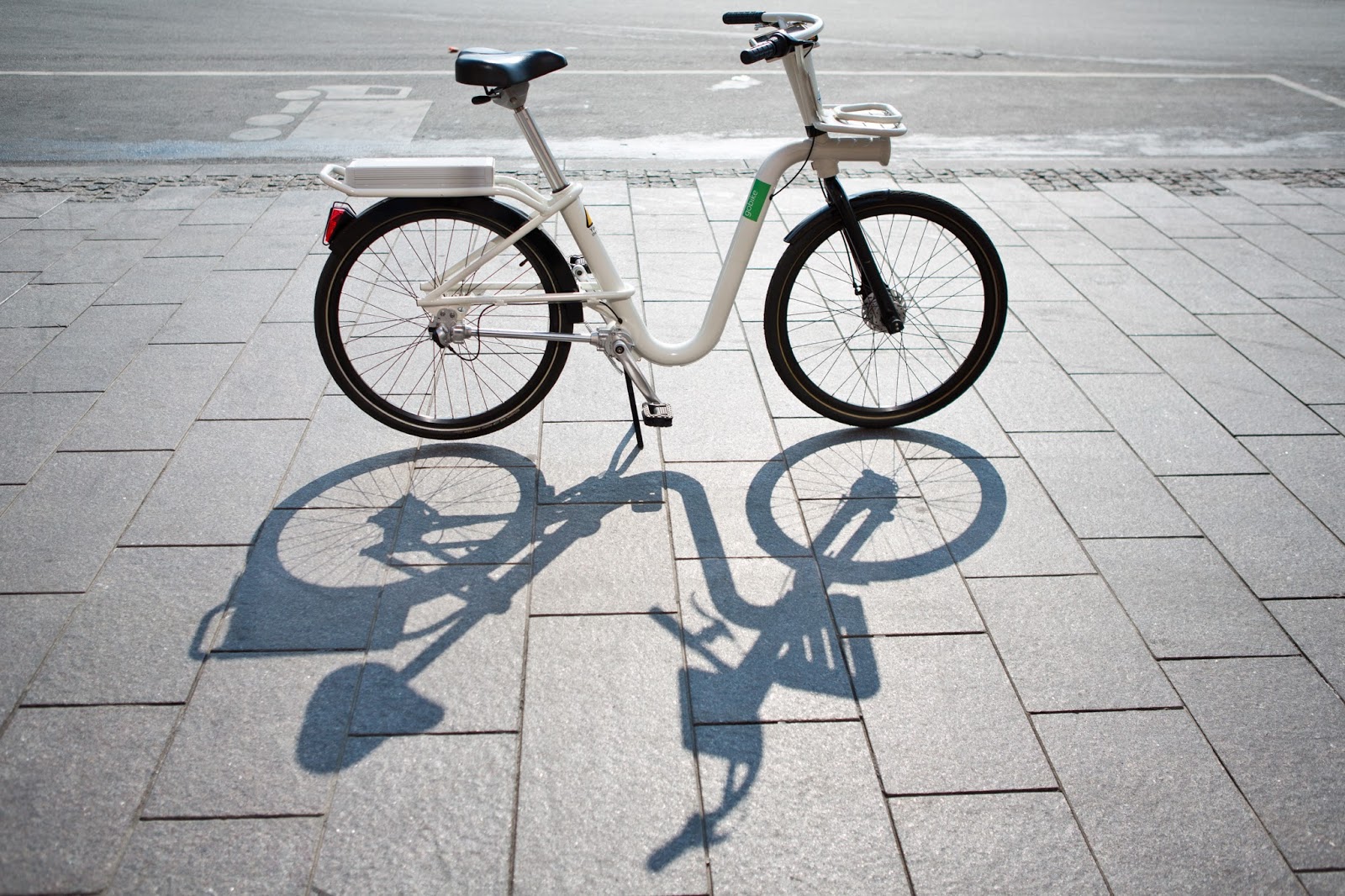
Gobikes on the street in Copenhagen
Something is rotten in the state of Denmark. The Copenhagen Bycyklen operator, Gobike, has 14 days to complete its contract with the cities of Copenhagen and Frederiksberg and the Danish State Railway Company, DBS, according to Danish news source, The Local. If Gobike does not fulfill its promise of 1,860 bicycles and electric charging stations by May 1, 2015 it will be forced into bankruptcy.

Gobike won the contract in 2012 to bring advanced 4th generation bike-sharing to the Copenhagen region, thereby replacing the old 2nd generation service that had existed since 1995. The Gobike bicycle has computer tablets on the handlebar to transact payments, give GPS directions, and facilitate advertising. The bike is also a pedelec -- an electric-assist bicycle. About 420 of the bikes are in operation currently in Copenhagen and Frederiksberg, but the contract has not yet been satisfied as this amounts to only 23% of the full number of bikes required. Many of Gobike's problems stem from its bicycle manufacturing supplier, MIFA, which had financial problems preventing bike manufacture.


Gobike Tablet Computer
The Gobike experiment is a giant step forward for bike-sharing with all of the transit interconnection and mapping features that it introduced for bike-sharing in the 21st century. Even if it stumbles, the future of bike-sharing has begun to roll in the same direction.

Let's see what May brings to Copenhagen.

UPDATE: Gobike is given until mid-October 2015 to complete the build out of the system with the full complement of bikes as contracted: The Local dk

News in Danish: DRdk, Computerworld and DRdk

Images: The Bike-sharing Blog

Russell Meddin           bikesharephiladelphia.org


Keep in touch with The Bike-sharing World with The Bike-sharing World Map. It is the premiere resource for information on cities with bike-sharing programs and the complement to The Bike-sharing Blog. Use this easy web address for viewing the map:  


Follow the Map on Twitter@BikesharingMap

Monday, June 2, 2014

The Bike-sharing World - First Week of June 2014

NORTH AMERICA:
USA:
       Washington, DC

It's not too late to register to take part in the conversations on how Public Policy and government regulations will affect bike-sharing for 2014. Help craft the direction of Public Policy for bike-sharing next week in the Capital City of the USA. See you in DC!

Bemidji, Minnesota:
Nice Ride Minnesota bike-sharing is going into the bike rental business in an upstate Minnesota summer resort town. Bemidji Nice Ride will begin renting bicycles out of four manned locations in the middle of June. There will not be self-service kiosks available as with the Nice Ride program in Minneapolis and St. Paul, Minnesota.

EUROPE:
DENMARK:
Copenhagen:
Bycyklen gobike Station - More Photos
After being one of the first cities to introduce 2nd generation bike-sharing in 1995, with Bycyklen, those odd looking, grocery trolley tethered bicycles, Copenhagen in now offering something close to 4th generation bike-sharing with an odd looking, computer tablet controlled, electric assist - pedelec- called the new Bycyklen for 2014. 
Although already on the streets during testing for a few months, the new program was only opened to public use this April. There has not been the fanfare of an official launch as of yet. Currently though, there are 250 gobikes in 10 stations. From the original plan, the program is scheduled to grow to around 1,250 gobikes in 65 stations.
The price for casual use is 25kr (US$4.50) per hour. With the monthly subscription of 70kr (US$12.75), plus an hourly usage of only 6kr (US$1.00). There are incentives and penalties for picking up or returning the gobikes away from the designated stations. The bikes are a bit heavy, but a cool ride.

ASIA:
CHINA:
Hangzhou:
Hangzhou, China -So many bikes outside the bike station
Reports out of China indicate the Hangzhou now has 78,000 bicycles in its bike-share fleet. According to HangzhouTravel.com, there has been a jump of 10% in daily usage of the program. Nearly 2,000 bicycles need maintenance daily. There are many cities throughout the world that would love to have a fleet of that size! Over 3,000 bikes each month need to be completely overhauled. New maintenance procedures has brought the fleet up to a level of 97% of bicycles with a rating of road worthiness.

Wuhan:
From the Haksong Evening News, is a report that the Xin Feida bike-share program in Wuhan has not been keeping up with its fleet and stations. The news agency reports that there are many stations void of bicycles and that the 300 million yuan (US$48,000,000) investment for the program hasn't fulfilled all of its promises. Hangzhou, China has a truer count on its bike share fleet and now is considered the largest program in the world.

THE WORLD:

Recent internet stories from a policy institute on the state of world bike-sharing in a "2014 Bicycle Share Fact Sheet"  have been lacking in accuracy.  
Since January there are over 700 cities in the world with active automated bike-share programs. Italy is overtaking Spain as the country with the most bike-share cities and China, now in third place, has overtaken Germany.
For a better survey of the bike-sharing world, The Bike-sharing World Map keeps in its legend a running total of the number of cities with automated bike-sharing.

images: The Bike-sharing Blog


Russell Meddin            bikesharephiladelphia.org


Keep in touch with The Bike-sharing World with The Bike-sharing World Map. It is the premiere resource for information on cities with bike-sharing programs and the complement to The Bike-sharing Blog. The easy web address for viewing the map is www.bikesharingworld.com.

Follow the Map on Twitter@BikesharingMap


Thursday, August 1, 2013

Sneak Peak at Copenhagen's Cykel DK

 
Tak (thanks) goes to my friends in the Cities of Copenhagen and Frederiksberg for a sneak peak at their upcoming bike-sharing service, Cykel DK. This new uber high-tech service is to launch this fall in Copenhagen and Frederiksberg, Denmark and will have some unique features such as an Android tablet with built-in GPS, real-time train departures and ticket integration, and real-time info on available bikes and docks in the area. Unfortunately, real-time Tour de France footage won't be available with this version of the software. I'm keeping my fingers crossed for this on version 2.0. 


There will be 1,260 bikes at 65 stations and the service, of course, will be available 24 hours per day, 365 days per year. Customers will use the tablet to enter their credit card info to unlock the bike. Tourists and other casual customers will pay 20 DKK (about 3.50 USD) per hour. Frequent customers can purchase a membership for 50 DKK (about 8.85 USD) per month.


Cykel DK is a non-profit that will be operated by the cities of Copenhagen and Frederiksberg plus DSB -- Denmark's national railway system. For the Blog's U.S. readers, can you imagine Amtrak getting into the bike-share business?! It makes so much sense as an extension of their existing inter-city mobility provision. And Amtrak wouldn't even be the second or third national railway to do this: Deutsche Bahn in Germany, Dutch Railways in The Netherlands, and SNCB in Belgium already do this, plus I'm sure a handful of others.


I'm not sure if I've seen a bike-share technology that will truly take us into the 4th generation of bike-share, but from what I've read so far, it's looking like this could be it.

Here's their video with more info.


More information about Cykel DK is at http://www.byogpendlercyklen.dk and gobike is at http://gobike.com.

Image credits: Ursula Bach and gobike

Tuesday, November 6, 2012

Copenhagen is getting ready to GOBIKE

GOBIKE - Copenhagen's Bycyklen Replacement
Just after terminating its 17-year old coin-operated Bycyklen bike-share system, Copenhagen City Hall has changed its mind and will fund a new system for 2013 according to The Copenhagen Post. The new Bycyklen is GOBIKE

GOBIKE is the newest version of the Urbikes system, from a company based in Barcelona, Spain. There are a few innovations scheduled for the Copenhagen system. The most intriguing is the utilization of some of the research from the Massachusetts Institute of Technology SENSEable City Laboratory programs: CopenCycle and The Copenhagen Wheel. GOBIKE riders will have real time information at their figure tips with a touch screen computer between the handle bars as they negotiate the one of the world's leading cycle-friendly cities.


The on-board computer will plan your route with a map display. It can give real-time transport schedule information with ticketing integration. It can furnish information on activities in areas through which you are cycling. Real-time bike and docking station availability is displayed as well.

To make it easy to find and take a bike, a smart phone app will locate the nearest bike and allow you to reserve it. Whether or not the app will reserve an empty slot to return the bike is yet to be seen! This system will really be the beginning of 4th generation bike-sharing.

The city will install 2,000 GOBIKES at bike-share stations near public transport hubs to achieve seamless transfers from train, tram, and bus. The bikes have a shaft drive instead of a chain system and puncture-proof solid tires to reduce maintenance needs. The system is scheduled to stay open all year round.

Keep reading The Bike-sharing Blog for GOBIKE's inauguration as it happens. 

The Bike-sharing World Map is the #1 global resource for bike-sharing systems. Keep up-to-date with the changing bike-sharing world by visiting us.

images: GOBIKE


Russell Meddin    bikesharephiladelphia.org

Tuesday, October 2, 2012

Bycyklen is Dead. Long Live Bycyklen!

The City of Cyclists won't be modernizing its bike-sharing service any time soon due to a decision by the Copenhagen City Council. They recently voted not to fund a modernization of one of the earliest bike-sharing services, Bycyklen, which was born in 1995 and is still in operation. Rather than smart cards and solar stations, this service uses a coin deposit lock and the honor system which had worked reasonably well in its early years, but hasn't been maintained properly by its present operator -- AFA JCDecaux. 

According to The Copenhagen Post, Ayfer Baykal, Copenhagen's deputy mayor for technical and environmental affairs, "defended the city’s decision not to invest in the cycle sharing scheme this year.
“They’re junk, I agree with [the Danish Cyclist Federation] on that issue. The city bike scheme, as it exists today, needs to be updated. It is old and outdated. But right now we need to prioritize.”
Deputy Mayor Baykal continues, “The city bike scheme is primarily for people coming from outside the city because Copenhageners have their own bicycles. I have chosen to prioritize better cycling conditions in Copenhagen through improved bicycle lanes and bicycle parking instead of the bicycle sharing system.”

What better way to help tourists experience the city than the way Copenhageners do - by bike? If a Bycyklen or other bike-share bike isn't available to a tourist, he or she could just as easily use a taxi or rent a car. To the environment, it doesn't matter whether the pollution comes from a resident or a tourist, but rather that the pollution is created. Also, tourists are the most profitable user segment as they contribute more financially than residents do through day membership or per minute fees.

While Copenhageners are bike-friendly, do they always bring their bike with them? I too live in a city with a growing bike mode share and frequently go by bike, but sometimes I just don't have my bike with me. The local bike-share service, Capital Bikeshare, frequently helps me get from point A to point B. I could otherwise take the train or drive.

The 150 million Danish kroner (26 million USD) will instead be used to make cycling improvements in the city, which is not a bad second place project, however, a piece of reality in how local governments are stretched thin for funding for many deserving projects. Additionally, the end of Bycyklen is near as the contract with AFA JCDecaux for the service expires October 31. Not sure what will happen after that with bike-sharing.

On a personal note, Bycyklen got me interested and excited about bike-sharing back in 1995 as I read about the new Bycyklen on-line and went to Copenhagen for a semester abroad to learn about bike-sharing and this quaint modern bike-friendly city which I, in turn, fell in love with. I was back last year in a professional capacity to work with the Cities of Copenhagen and Frederiksberg and DSB in developing the public tender for a new operator and vendor. Hopefully the Council will see the value of modernizing the bike-sharing service not only to regain a worldwide leadership in bike-sharing that it once had.

Tuesday, September 20, 2011

Copenhagen & Frederiksberg Public Tender Upcoming


The Cities of Copenhagen and Frederiksberg, as well as public transport operators Metroselskabet and DSB, have entered a collaboration on the development and establishment of a bike-sharing system. At a later stage, the system could be offered to other organizations, such as other cities, public entities, private enterprises, and the like.

The task of establishing, operating, and maintaining the bike-sharing-system will be EU-tendered in December 2011. In the beginning of October 2011 a tender notice will be published and the prequalification will start. In connection with the prequalification, an informational meeting for potential bidders will be held on October 4th to inform about the practical matters regarding the tender. The meeting will take place at DSB, Sølvgade 40B, from 4-6pm local time. Registration for the information meeting can be made no later than October 3rd at noon by sending an email to Kim Guldbrandsen at kgu@dsb.dk.

Their vision is to give citizens, customers of public transport, tourists, and visitors in the city the possibility of using a door-to-door public transport system, and not only between train or bus stations. This will be secured by connecting the existing public transportation system, which focuses on transportation of many people over long distances with high comfort and short travel times, with the high flexibility of a bike. This generates increased accessibility to business parks, residential, shopping, and other areas of interest, which today are rarely serviced by public transport or where the existing network does not offer an attractive service.

image credit: Denmark Travel Guide

Thursday, December 10, 2009

Copenhagen Bike-Share Competition

Winners of the Copenhagen Bike-Share Competition

The City of Copenhagen announced the winners of the open competition to design a new Bike-sharing program for the city that has had bike-sharing since 1995. The competition originally announced in September had a November 18, 2009 submission deadline. See the Bike-sharing Blog post. First Prizes go to OPEN BIKE by Lots Design, Koucky & Partners and Green Idea Factory from Sweden and Germany and myloop by Thomas Coulbeaut from Japan. See all the fascinating entries at CPH Bike-Share Competition

Russell Meddin bikesharephiladelphia.org

Sunday, September 6, 2009

Copenhagen Open Design Competition for a new Bike-sharing system

What does the one of the world’s most bike-friendly cities do when it wants to upgrade its 2nd generation bike-sharing system to a modern 21st Century system? Well, all you bike-sharing geeks, consultants, vendors, manufacturers, and wannabe experts, here is your chance to pedal into the breakaway. Copenhagen is having a world-class International Design Competition to create a world-class bike-sharing system!

The mayor of Copenhagen, Klaus Bondam, has put out the Invitation announcing, "In 1995, Copenhagen was the first city to introduce a modern bike share system – Bycyklen - or The City Bike. Much has happened since this Bike Share v. 1.0 was launched and, over the past ten years, many large cities now enjoy exciting, new bike share systems. From Barcelona to Beijing, a new generation of bike share systems have blossomed. To the delight of locals, tourists and commuters alike.

Copenhagen is a unique, world-class cycling city and this fact should be reflected in the city’s bike share system. Our city is the best example of how the bicycle can become the preferred form of transport in a modern city. An attractive and modern bike share system can contribute to strengthening Copenhagen’s bicycle culture. Therefore The City of Copenhagen is pleased to launch an open design competition in order to determine how a bike share system v. 3.0 would look and work in the city in the future."

Here are the rules and deadlines. You only have until mid-November to take this challenge! When other cities put out Request for Information or Request for Proposals for bike-sharing, Copenhagen keeps in forefront of world cycling with this International Design Competition.

Russell Meddin bikesharephiladelphia.org

Thursday, July 31, 2008

Back to the Future for Melbourne


Just when you think that bike-sharing is pushing the edges of third generation technology, another second generation program is nearing its launch. According to Australia's "The Age",

"A shared 'public bicycle' scheme, similar to a city bike initiative in Denmark, is set to be introduced in Melbourne, Government documents show.

"The system would be similar to a scheme in Copenhagen, which has had a free "city bike" initiative in place since 1997 [actually 1995].

"In Copenhagen, cyclists put a coin in a deposit box and may then take a bicycle for as long as wanted, so long as it is returned to one of 110 city bike racks. It cannot be taken outside the city centre.

"A spokeswoman [for the city] confirmed yesterday the Transport Department was working on the bicycle scheme, to be in place by the end of this year."

The beauty of second generation (coin deposit lock) bike-sharing is its simplicity. Instead of fancy-shmancy high tech bikes and stations, all that's needed is low tech one speed bikes and coin deposit locks. This greatly reduces the cost per bike. However, as there's no tracking method of users of the bikes, theft rates do tend to be higher than third gen programs. As the head of the City Bike Foundation of Copenhagen said to me in 1996, "If a City Bike is stolen, at least the thief is riding a bike." In many ways he's correct. Third gen systems can cost up to $4,500/bike whereas second gen systems can cost $500/bike.

Copenhagen's City Bikes (or "Bycyklen") were ingeniously designed by the father/son team of Wilhelm and Niels Christiansen and also are used is Aarhus, Denmark; Helsinki, Finland; and at a museum in Dusseldorf, Germany. The photo above is a sample of the 2000-model of the bikes which I helped build with a team of great Danes in Helsinki for the launch of their program.