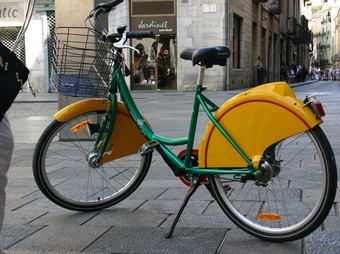
An article in The New York Times, titled "French Ideal of Bicycle-sharing Meets Reality" discusses the problem Paris has been having with vandalism and theft of bike-sharing bikes with 80% of the initial bikes having been replaced. Data has been hard to come by, however, Velib' is an outlier in terms of theft and vandalism in a bike-sharing programs due to social unrest in the Parisian suburbs. Until recently, the suburbs have generally been a place in America, where those who can afford to leave the ills of the city, have fled. In Paris, however, the suburbs are a place for those who cannot afford to live in the luxury of the city.
There's technology and demography. I'm not aware of problems with JCDecaux's technology working poorly in other cities that use their system, so demography is the key issue. There's a great deal of social unrest in Paris' suburbs as sociologist Bruno Marzloff stated in The New York Times article. A European Working Conditions Observatory report highlights just how bad things are in France's suburbs with "the unemployment rate... between 35% and 54% for men, between 40% and 60% for women, and between 30% and 50% for young people."
Instead of ad campaigns telling people to respect the bikes, JCDecaux and the City of Paris should be using the bikes to respect the people, if they aren't already. The very same individuals who are damaging the bikes should be employed by JCDecaux to repair them. Until the super high unemployment rates decrease, the social unrest will continue and bike-sharing as a representative of the City will be a pawn in their battles.
Outside of the social unrest factor, bike-sharing is a good value for its expense. If you calculate the cost per trip of moving a person by bike-sharing, foot, transit, and car, I'd put my money on bike-sharing being the most cost efficient at moving a person per mile. The cost of building a mile of track or asphalt for the other vehicles is expensive, compared to that of what a bike needs.
In this calcuation you would need to include the public health benefits in terms of decreased medical expenses due to increased activity, lowered emissions, and increased productivity as folks can spend their time where they want to be, rather than stuck in traffic. Cities spend hundreds of millions working on these issues and bike-sharing leverages benefits associated with each.
You would also need to include in this calculation how much positive publicity Paris has garnered from around the world for their bold bike-sharing innovation. It seems as if everybody has heard about "those bikes in Paris" even if they don't know what Velib' or bike-sharing is. The value of this publicity alone has got to be in the tens or hundreds of millions of dollars. France continues to remain at the top of the list of countries with international tourist arrivals, according to the World Tourism Organization, and it's likely that many of these visitors are visiting Paris and are one of the up to 145,000 trips per day that are made on Velib'.
So I'd say that even with a high vandalism and theft rate that bike-sharing is too important to Paris for it to shutter its program. Bike-sharing isn't the problem, it's part of the solution, if we let it be.
image credit: Guardian